Atlas V Rocket Launch: Everything You Need to Know About America's Legendary Launch Vehicle
Atlas V Rocket Launch: Everything You Need to Know About America's Legendary Launch Vehicle
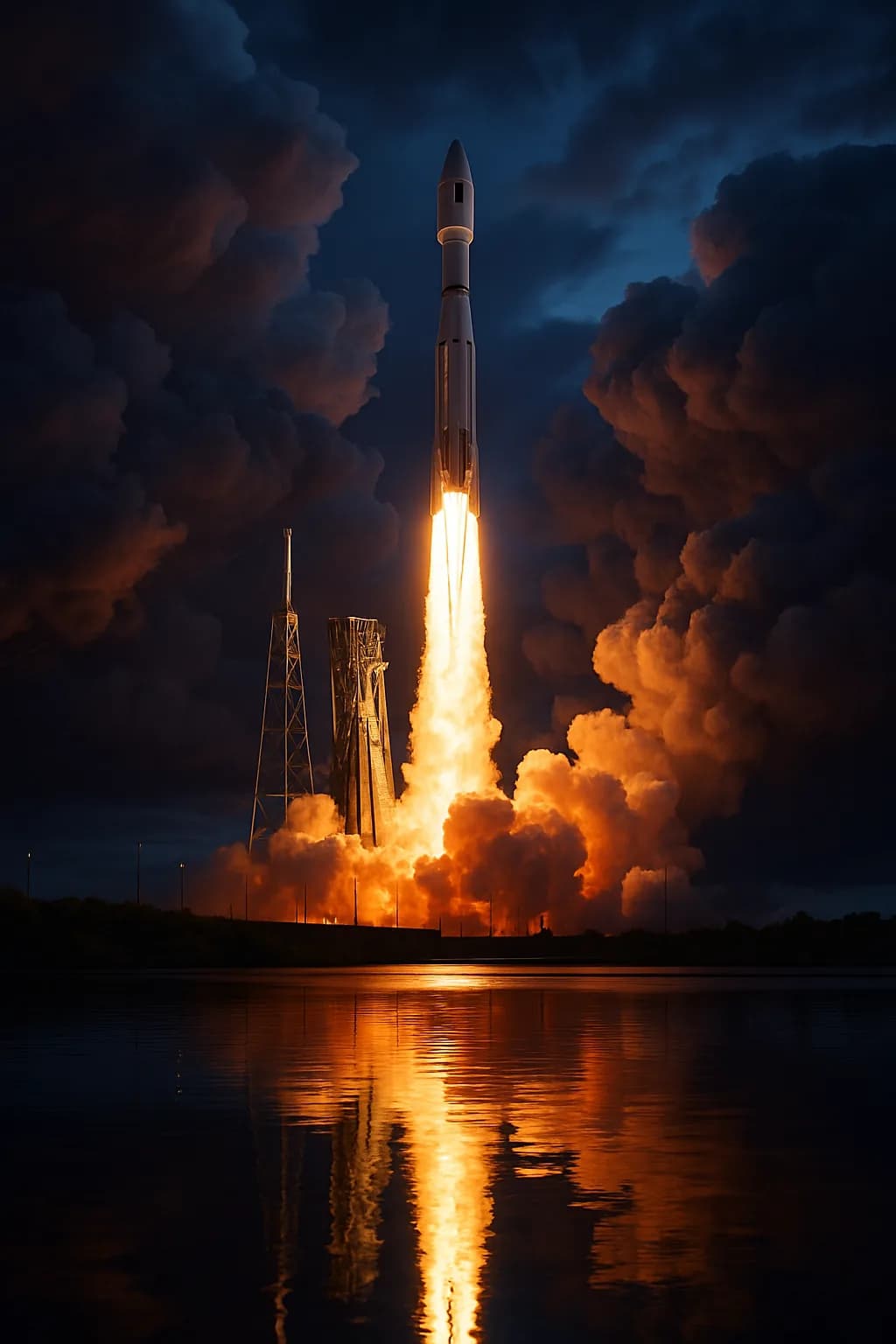
For over two decades, the Atlas V rocket has stood as one of the most reliable and versatile launch vehicles ever built. From delivering military satellites to powering some of NASA's most celebrated deep-space missions, the Atlas V has earned its place in the annals of aerospace history. Whether you're a space enthusiast or a casual observer, understanding the Atlas V launch system offers a fascinating window into how humans continue to push the boundaries of what's possible beyond Earth's atmosphere.
What Is the Atlas V Rocket?
The Atlas V is an expendable launch vehicle developed by Lockheed Martin and later operated by United Launch Alliance (ULA), a joint venture between Lockheed Martin and Boeing. First launched in August 2002, the rocket was designed to carry a wide range of payloads — from commercial satellites to national security spacecraft — into various orbits. Its modular design allows for significant customization, making it adaptable to missions with vastly different mass and trajectory requirements.
The rocket family comes in several configurations, identified by a three-digit code. The first digit represents the fairing diameter, the second indicates the number of solid rocket boosters attached, and the third specifies the number of engines on the Centaur upper stage. This flexibility made the Atlas V a go-to choice for both government and commercial customers.
Historic Missions Powered by Atlas V
The Atlas V's launch history reads like a highlight reel of modern space exploration. Among its most celebrated payloads:
- Mars Reconnaissance Orbiter (2005): Sent to study the Martian surface and atmosphere in unprecedented detail.
- New Horizons (2006): The fastest spacecraft ever launched, which completed the first flyby of Pluto in 2015.
- Curiosity Rover (2011): Delivered NASA's most sophisticated Mars rover, which continues to explore the Red Planet today.
- OSIRIS-REx (2016): Launched on a mission to collect asteroid samples and return them to Earth.
- Boeing Starliner: Carried astronauts as part of NASA's Commercial Crew Program.
These missions underscore the rocket's extraordinary range and dependability. While companies like SpaceX are rewriting the future of space exploration with reusable rockets and aggressive launch schedules, the Atlas V's track record of consistent, precision launches has made it an irreplaceable asset in the American launch portfolio.
How Does an Atlas V Launch Work?
A typical Atlas V launch begins with ignition of the Russian-built RD-180 engine, which powers the first stage. This engine burns a combination of liquid oxygen and kerosene (RP-1) to generate roughly 860,000 pounds of thrust at liftoff. Depending on the mission configuration, one to five solid rocket boosters may supplement the first stage for additional lift capability.
After the first stage separates, the Centaur upper stage ignites its RL-10 engine, which uses liquid hydrogen and liquid oxygen to achieve the precise orbital insertion required for each mission. The Centaur is renowned for its accuracy and has been a critical component of deep-space missions requiring exact trajectories.
The RD-180 Controversy
One of the most politically charged aspects of the Atlas V program has been its reliance on the Russian-built RD-180 engine. Following geopolitical tensions — particularly after Russia's military actions in Eastern Europe — American lawmakers pushed strongly to eliminate dependence on foreign propulsion technology. This controversy accelerated efforts to develop domestic alternatives and ultimately contributed to ULA's decision to develop the Vulcan Centaur rocket as the Atlas V's successor.
Atlas V vs. Modern Competitors
Today's launch market is more competitive than ever. New entrants have disrupted the traditional model of expensive, expendable rockets with lower-cost and reusable alternatives. Yet the Atlas V's proven reliability continues to command respect, particularly for high-value national security payloads where mission assurance outweighs cost considerations.
The Atlas V's Final Launches and Legacy
ULA has announced that the Atlas V is being phased out in favor of the next-generation Vulcan Centaur rocket. The final Atlas V launches are being carefully allocated to remaining missions, marking the end of a remarkable era. Much like how iconic figures leave lasting legacies in their fields — the way Naomi Osaka changed tennis forever through both her performance and advocacy — the Atlas V leaves behind a legacy defined by mission success, engineering excellence, and scientific discovery.
What Comes Next?
As the Atlas V takes its final bow, ULA's Vulcan Centaur is positioned to carry the torch forward, offering improved performance and the ability to use domestically produced BE-4 engines from Blue Origin. The transition represents a new chapter in American launch capability — one built on the lessons learned from decades of Atlas V operations.
The story of the Atlas V is ultimately a story about human ambition, engineering ingenuity, and the relentless desire to explore the unknown. Its missions have expanded our scientific understanding, strengthened national security, and inspired generations of future scientists and engineers. As we look toward the next phase of space exploration, the Atlas V's contributions will continue to serve as a foundational chapter in the larger story of humanity reaching for the stars.
Share this article
Comments