SpaceX: How Elon Musk's Rocket Company Is Rewriting the Future of Space Exploration
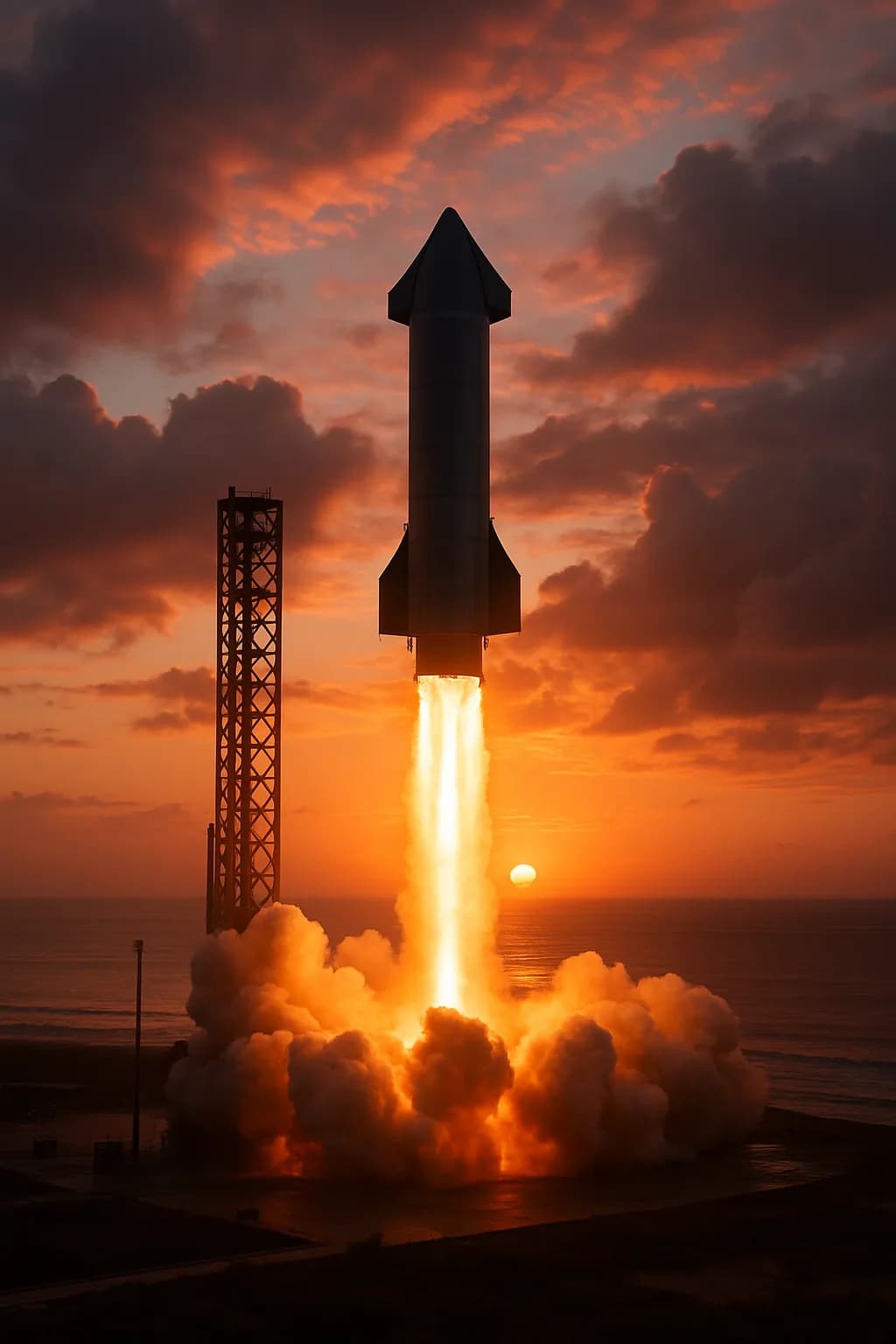
SpaceX: How Elon Musk's Rocket Company Is Rewriting the Future of Space Exploration
In just over two decades, Space Exploration Technologies Corp — better known as SpaceX — has transformed from a bold startup into the most influential private aerospace company in human history. Founded in 2002 by Elon Musk with the audacious goal of making humanity multiplanetary, SpaceX has redefined what's possible in space travel, satellite deployment, and interplanetary ambition.
The Origin Story: A Vision Born from Frustration
Elon Musk didn't start SpaceX because he was an aerospace engineer. He started it because he was frustrated. After visiting NASA and finding no concrete plans for a Mars mission, Musk decided to build the rockets himself. With approximately $100 million of his own money from the PayPal sale, he founded SpaceX in Hawthorne, California.
The early years were brutal. The Falcon 1 rocket failed three times before achieving orbit on its fourth attempt in 2008 — a success that saved the company from bankruptcy. That resilience has become the defining DNA of SpaceX ever since.
Reusable Rockets: The Game-Changing Innovation
Before SpaceX, rockets were essentially single-use vehicles — an enormously wasteful and expensive model. SpaceX shattered that paradigm with the development of the Falcon 9 and its revolutionary reusable first-stage booster.
In December 2015, SpaceX achieved what many called impossible: landing an orbital rocket booster back on solid ground. Since then, the company has landed and reflown boosters dozens of times, slashing launch costs from hundreds of millions to tens of millions of dollars. This breakthrough didn't just benefit SpaceX — it fundamentally disrupted the global launch industry and forced legacy players like Boeing and Lockheed Martin to rethink their entire strategies.
Much like how The Evolution of News: How We Consume, Share, and Trust Information in the Digital Age reshaped journalism through technological disruption, SpaceX's reusability model has permanently altered the economics of the space industry.
Starlink: Bringing the Internet to the World
One of SpaceX's most commercially significant projects is Starlink, a mega-constellation of low Earth orbit (LEO) satellites designed to provide high-speed internet access globally — including in remote and underserved regions.
As of 2024, Starlink operates over 5,000 satellites and serves millions of customers across more than 60 countries. The service has proven critical in conflict zones and disaster areas, demonstrating that satellite internet is no longer a novelty but a strategic global infrastructure. The Russia War: Understanding the Conflict, Its Global Impact, and What Comes Next highlighted Starlink's geopolitical significance when the technology became a lifeline for Ukrainian communications on the battlefield.
Crew Dragon and the Return to Human Spaceflight
In May 2020, SpaceX made history by launching NASA astronauts to the International Space Station aboard the Crew Dragon capsule — the first crewed orbital launch from American soil since the Space Shuttle retired in 2011. This milestone marked a new era of commercial human spaceflight and cemented SpaceX's role as NASA's primary crew transportation partner.
The Crew Dragon program has since completed multiple successful missions, including all-civilian spaceflights that opened the cosmos to non-professional astronauts.
Starship: The Most Powerful Rocket Ever Built
If Falcon 9 was the revolution, Starship is the moonshot — literally. Designed to be a fully reusable super-heavy launch vehicle, Starship stands 120 meters tall and is engineered to carry over 100 metric tons to low Earth orbit. NASA has selected Starship as the Human Landing System for the Artemis program, meaning it will return astronauts to the Moon for the first time since 1972.
Beyond the Moon, Starship is Musk's vehicle for colonizing Mars. SpaceX envisions building a self-sustaining city on the Red Planet within decades — an ambition that rivals the greatest exploratory undertakings in human history, comparable in cultural magnitude to how rising stars reshape their fields, much like Fernando Mendoza: The Complete Story of a Rising Star Worth Knowing illustrates the power of relentless ambition and vision.
The Business Model That Funds the Dream
SpaceX funds its Mars ambitions through commercial launch contracts, NASA partnerships, and Starlink revenue. The company is privately valued at over $200 billion, making it one of the most valuable private companies on Earth. This financial engine allows SpaceX to invest aggressively in R&D without the pressure of quarterly earnings reports.
What Comes Next
With Starship orbital tests advancing, Starlink expanding into mobile and maritime markets, and lunar missions on the horizon, SpaceX's trajectory remains steeply upward. The company is no longer just a launch provider — it is the backbone of humanity's next chapter in space.
SpaceX has proven that with enough vision, capital, and engineering talent, even the stars are not the limit.
Share this article
Comments